- This Week in Rookly
- Posts
- Rookly Fall 2025 Season - Week #5 Results, and a New Spectator Feature!
Rookly Fall 2025 Season - Week #5 Results, and a New Spectator Feature!
Your weekly recap of league standings, plus a look at the Game of the Week, a visit to the Coaches' Corner, and new spectator mode functionality.

Lucas Thompson
November 10, 2025

Welcome to the Fall 2025 weekly newsletter! This is where we will share a weekly update on league standings, highlight some great moments from each week’s games, learn a thing or two from our coaches, and of course, share any news about Rookly.
First let’s look at last week’s scores. You can click on the title of a league to view the full standings for that league. The standings pages are public, so please feel free to share with parents, friends, or whoever you think might be interested!
And now, without further ado, here are the standings after the fifth week of the Fall 2025 season:
Note: Veterans Day will not affect our league schedule this week; our Tuesday leagues will be running as per usual!
Week #5 Standings
(4:00pm ET) | (3:30pm PT) |
|---|---|
Cardinal Kung - 93 | WIISER - 119 |
Newman - 80 | Temecula Prep - 93 |
Drew Charter - 62 | Alta Vista - 74 |
Hannah Senesh - 59 | Oregon Episcopal School - 66 |
Pennfield - 58 | Lakeside School - 64 |
(3:30pm ET) | (4:00pm PT) |
|---|---|
Ransom Everglades - 120 | Stanford High School - 115 |
Pace Academy - 102 | Holy Ghost Prep - 80 |
The Journey School - 92 | Temecula Prep - 72 |
Lake Center Christian - 84 | St. Joseph’s Notre Dame - 57 |
Grayson - 81 | Archer - 54 |
(5:00pm ET) | (3:00pm ET) |
|---|---|
St. George’s - 101 | Opportunities For Learning - 129 |
Montgomery Academy - 96 | St. John Paul II - 93 |
Lake Wales Charter - 54 | Hendersonville - 82 |
Rogers - 47 | Nativity Prep - 78 |
Tulsa Honors - 42 | Marvin Academy - 50 |
(3:30pm ET) | (4:30pm ET) |
|---|---|
Calvary Day - 95 | Trinity Episcopal - 98 |
Camden Military Academy - 86 | Leffell - 88 |
Overhills - 69 | Austin Jewish Academy - 78 |
Nativity New Bedford - 60 | Eureka Springs - 76 |
Discovery Academy - 58 | Lakeside - 66 |
Game of the Week
Our game of the week goes to Alexis M (Ransom Everglades) and David H (Pace Academy)!
This was a very intense game that saw slight advantages for both players until reaching a completely even evaluation at move 39.
This endgame was interesting—Black was up a pawn, but White had a passed pawn on the a-file, and White’s a-pawn in conjunction with White’s knight on c6 kept Black’s king completely stuck on a8.

At move 46.
White was able to capitalize on a mistake from Black to win a pawn, trade knights, and sacrifice the passed a pawn in exchange for a more active king position. White was then able to use the active king to create a passed h-pawn!
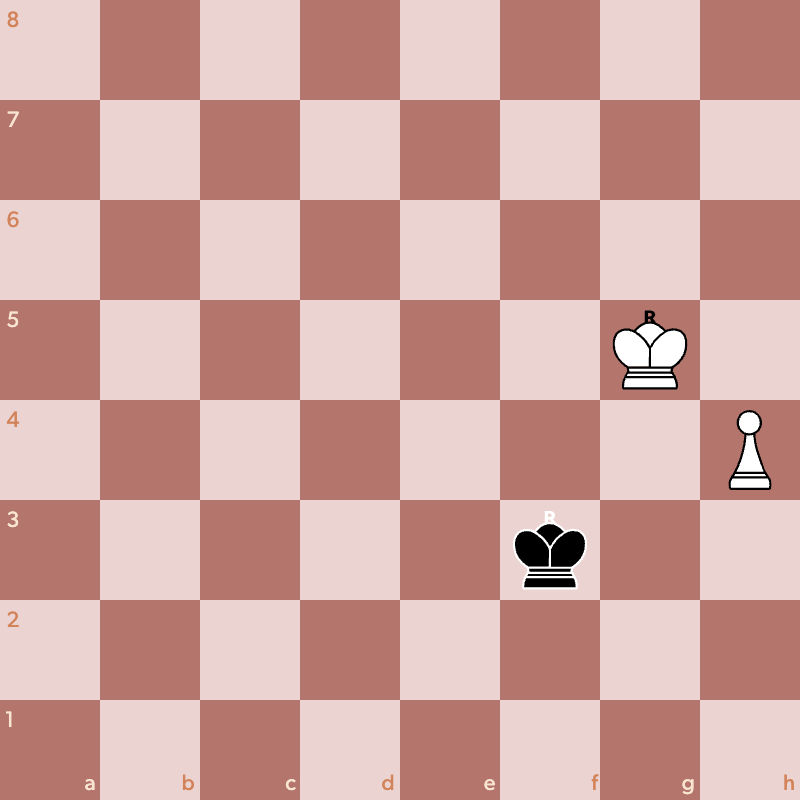
After white’s move h4 on move 60.
The black king was unable to defend against the pawn promotion, and this one ended up going white’s way in the end.
A great game from the opening to the middle game to the endgame, I recommend going through this one from start to finish!

Coaches’ Corner
Coach Lucas’s Tip of the Week:
Today, I’d like to go over and the infamous four-move checkmate, or Scholar’s Mate—how it works, how to avoid it, and why you’re better off playing something else as white.
The four-move checkmate is something we see attempted fairly frequently! I actually used to try it a lot myself when I was a kid, with mixed results; sometimes it gave me some quick wins, but more often it left me at a disadvantage.
In this lesson, I want to dissuade you from playing for a four-move checkmate as white. This attack relies on your opponent making a mistake, which is never a good strategy when playing chess.
Let’s look at the two variations of the four-move checkmate and how to defend against both of them.
Part 1: Understanding the Attack
An observation we can make before any moves take place is that the f7 square is the weakest point in black’s camp. This is the only pawn that is not defended by a piece (i.e. a knight, bishop, or rook).
Only the king watches over the f7 square.

Weak f7 square
White can try to exploit this weakness by converging the queen and the light square bishop on f7. This attack starts with e4, allowing white’s bishop and queen to enter the game.

White starts with e4
After a very natural response by black (e5), the white queen comes out, attacking the pawn on e5, and eyeing the weak f7 square.

White’s queen enters the game
Another natural move from black might be to play Nc6, developing a knight and defending the pawn on e5.
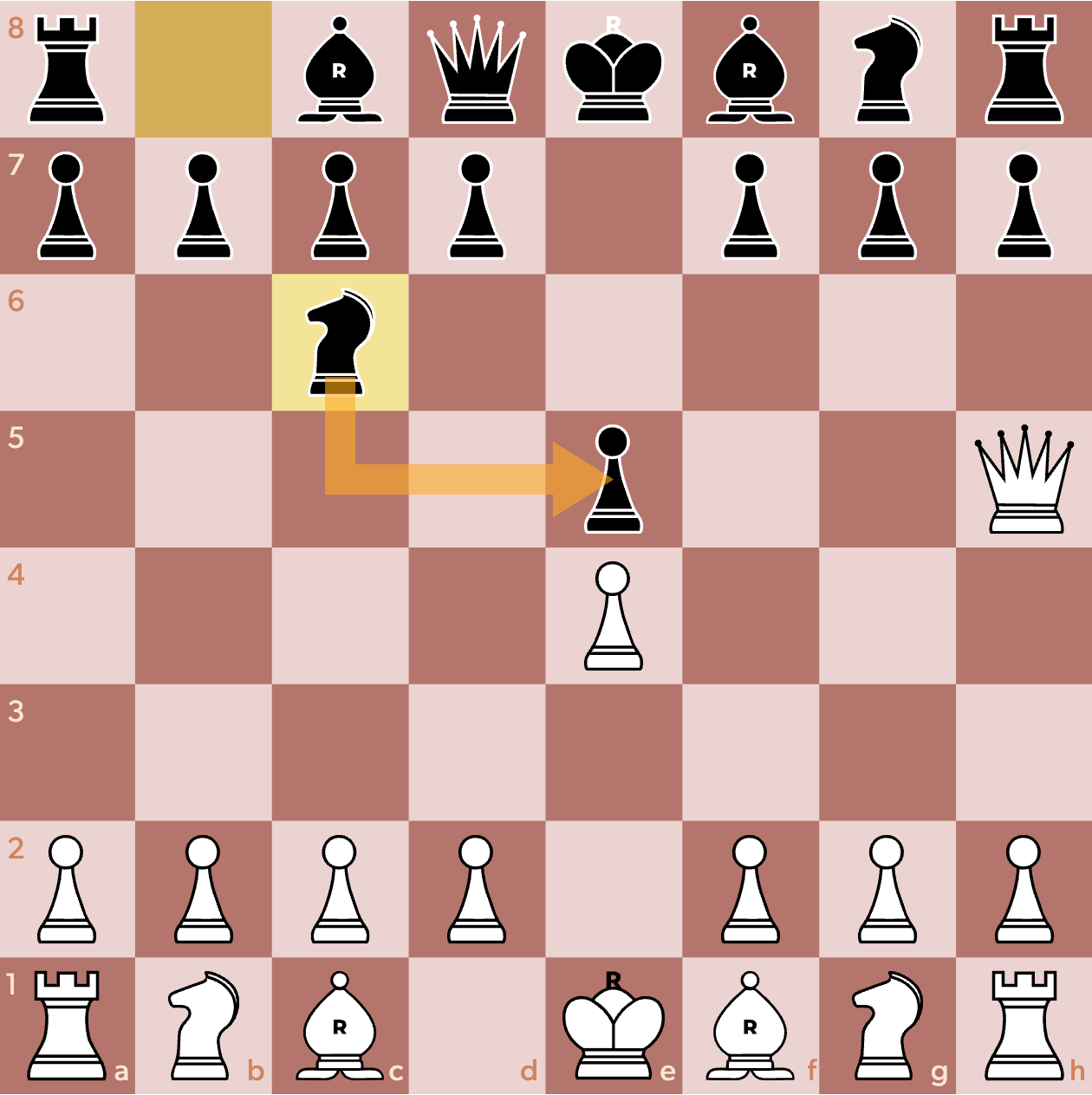
Black defends the pawn
Now white plays Bc4, and suddenly we have a mate-in-one threat!

White’s bishop creates a mate-in-one threat
If black doesn’t realize this and plays another seemingly natural move, Nf6 (to develop another minor piece, and attack the white queen in one move), it’s too late!

Black tries to defend
White can play Qxf7 and it’s all over.

Checkmate for white
Now let’s look at the other variation, where this time the white queen goes to f6, still eyeing that weak f7 square.

Another mate-in-one threat
An appealing move as black might be to play Nd4, attacking the queen and threatening a fork on c2—but again, it’s too late!
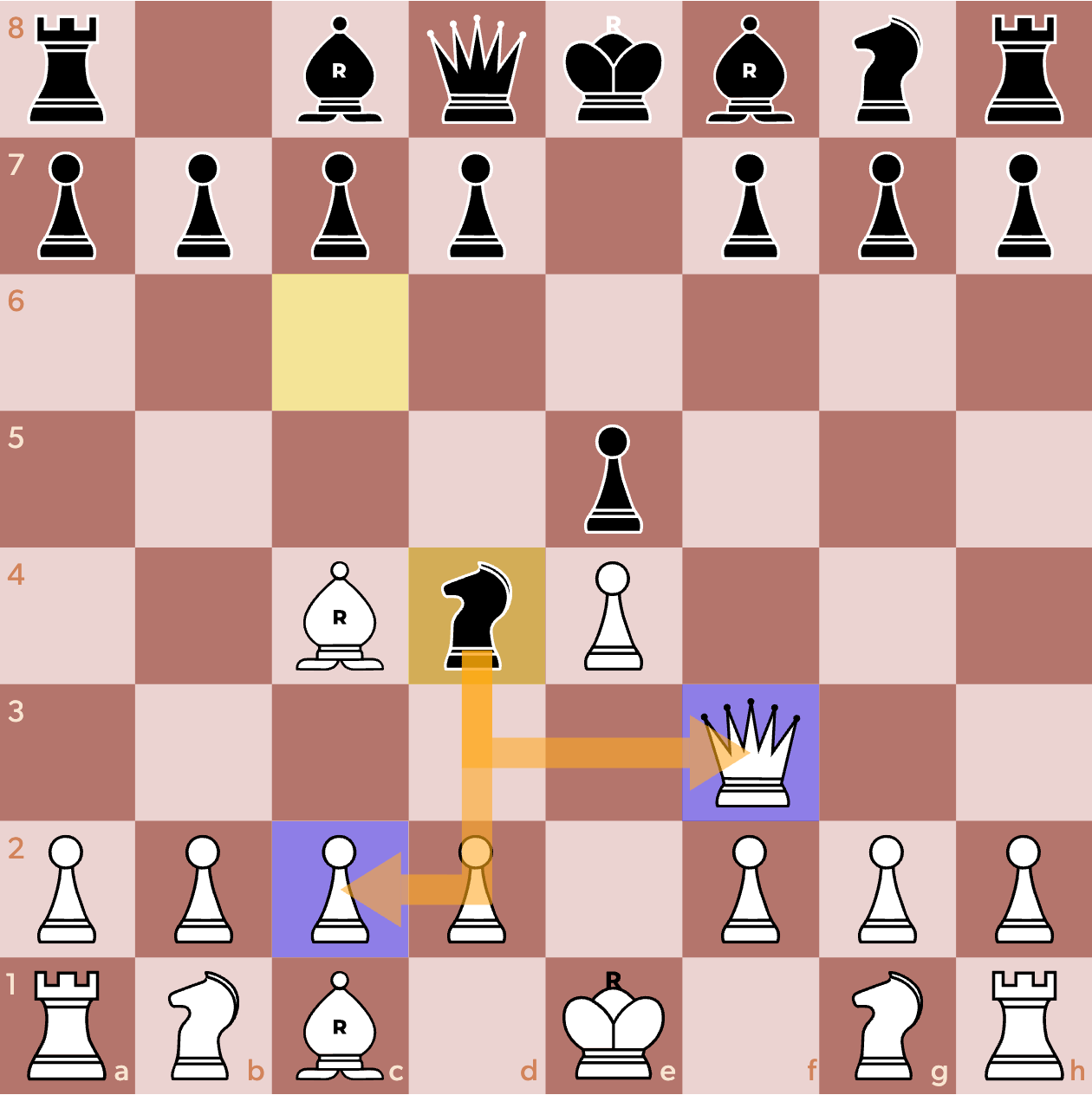
A possible counterattack?
White can still swoop in and end this one early.
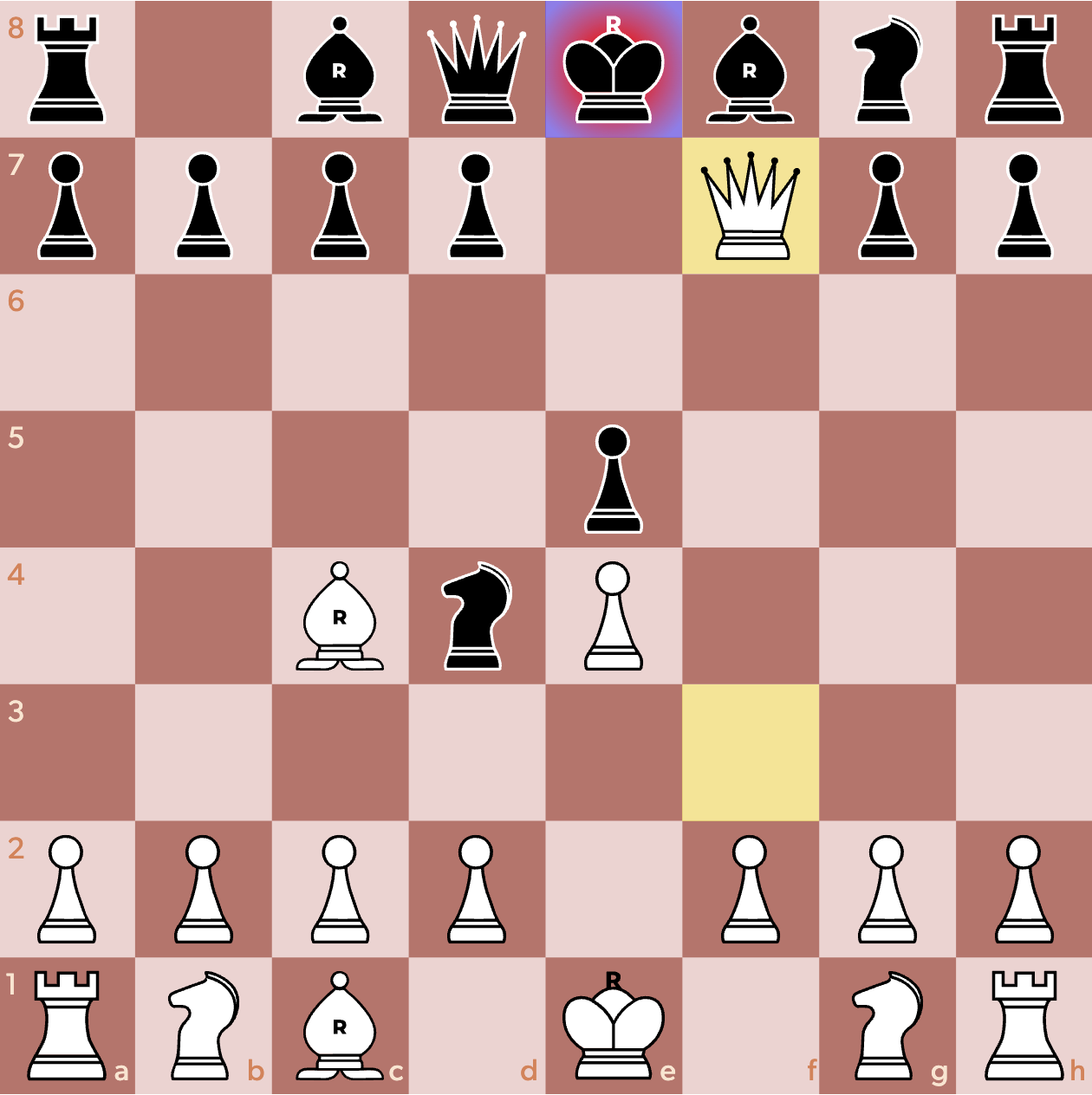
Checkmate again
Part 2: Ways for Black to Defend
Sticking with the Qf3 attack, a better move for black would be to play Nf6, cutting off the white queen’s vision of the weak f7 square. Note that Nf6 also covers the h5 square, meaning the queen can’t pivot to the earlier version of the four-move checkmate that we looked at.

Blocking the white queen
White might try something sensible, like launching the g pawn to try to kick the black knight on from its post on f6.
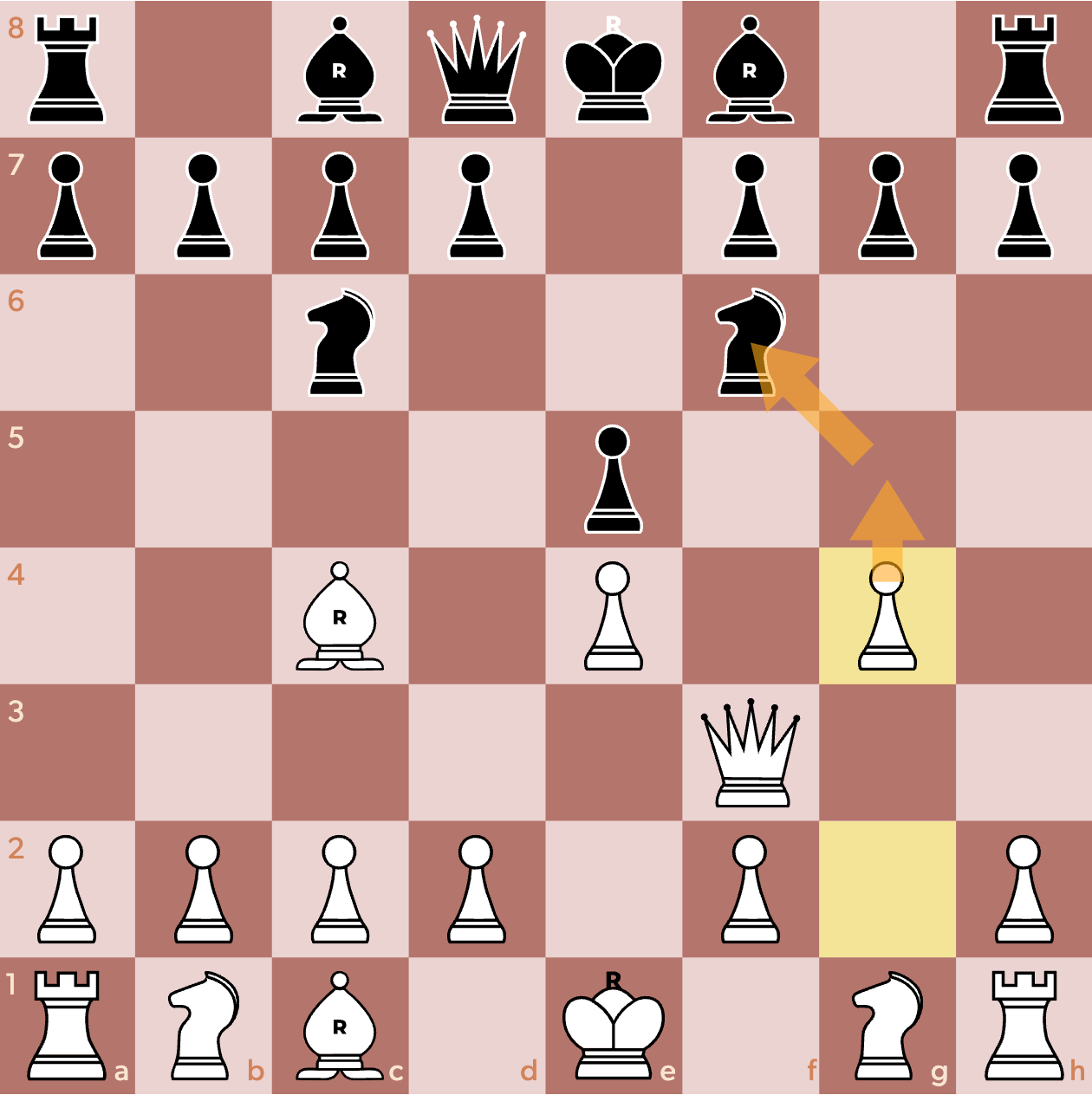
White tries to remove the knight
But it’s white who doesn’t have time! Now, black’s Nd4 move works because white doesn’t have the mate in one threat.
Now white is on the back foot—they have to defend against the fork on c2, and white’s pawns on e4 and g4 are both under attack from black’s knight on f6.
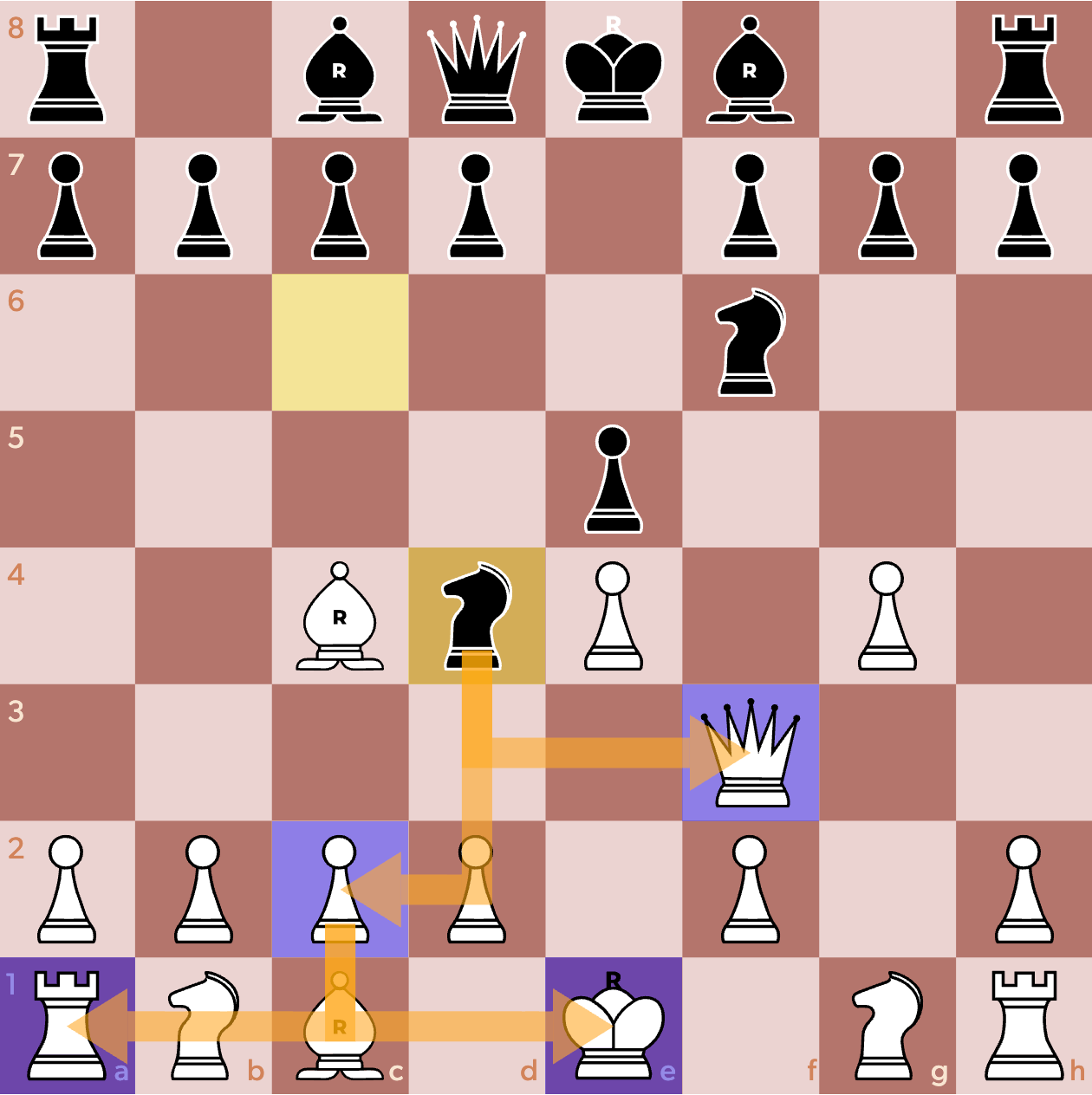
Now black can counterattack
How about the first variation we looked at? How can black stop white’s attack here?

Back to Qh5 mate-in-one threat
Black can play the very convenient move g6, foiling the white queen’s attack and punching back all at once.

A simple pawn move
And if the white queen reroutes to f3 and black faces another mate-in-one threat?
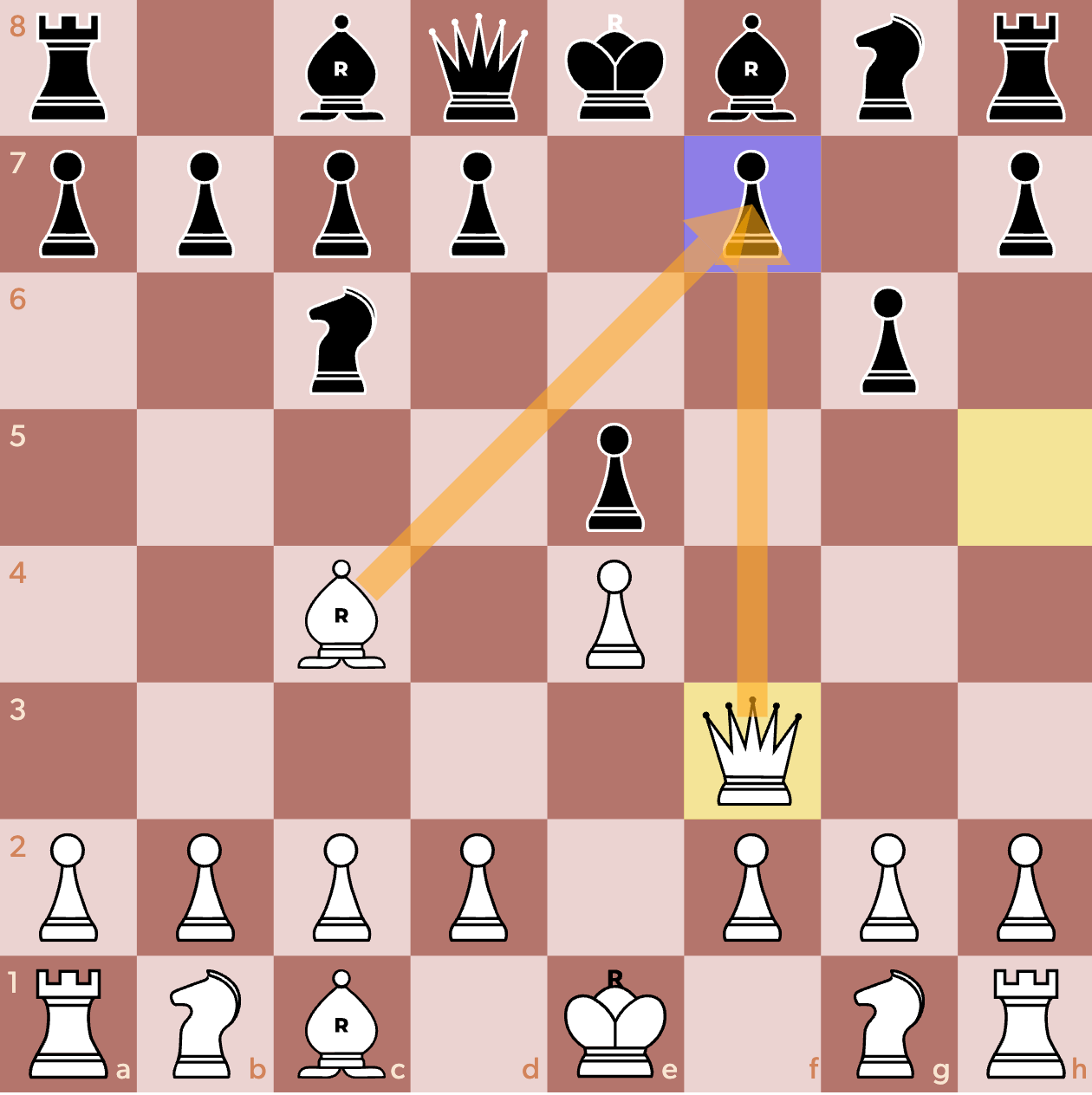
Another mate threat
Black can still play Nf6, once again blocking the white queen, and developing a piece at the same time.
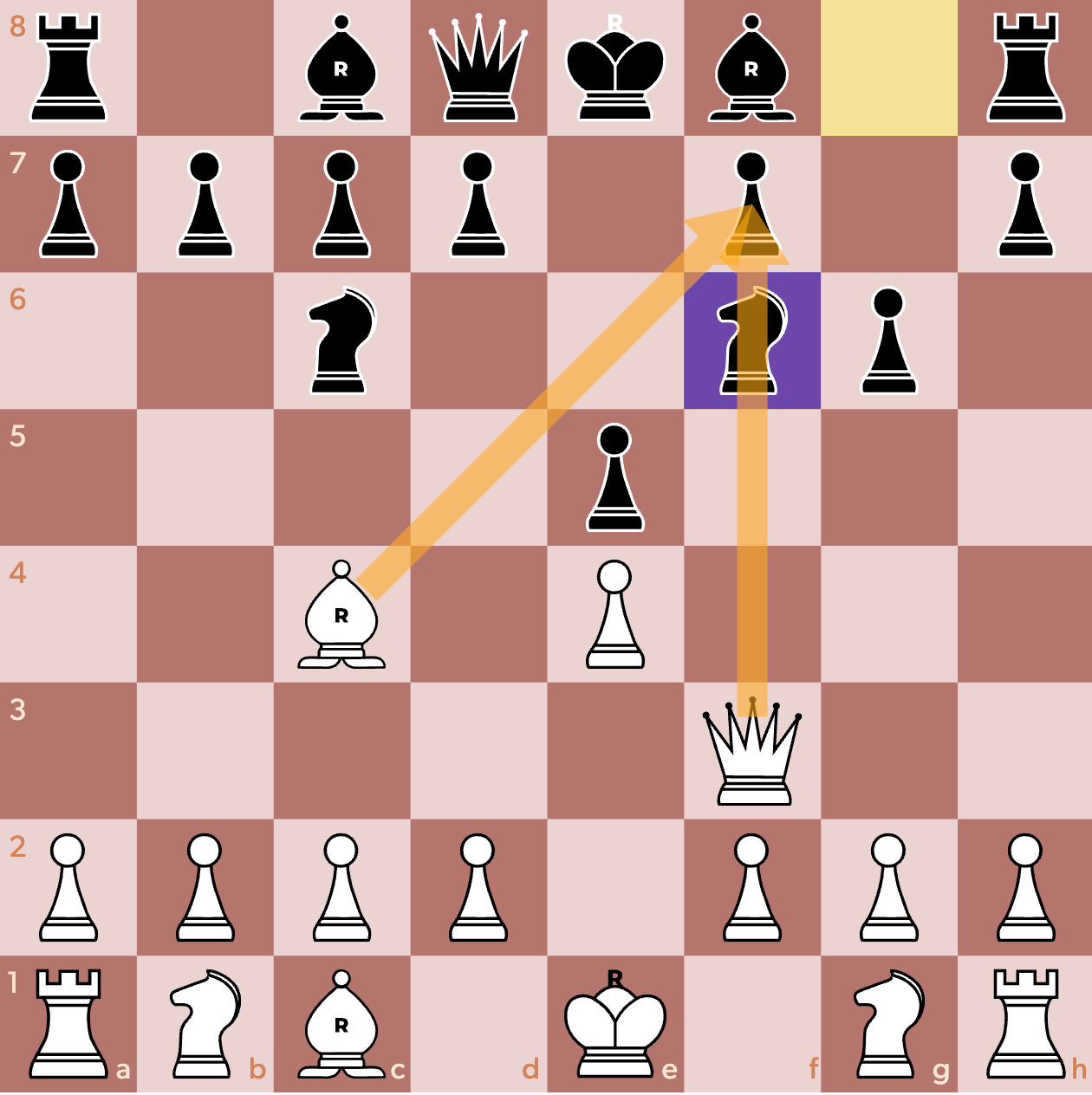
A convenient knight move to block
What if white is really committed to attacking, and instead of going for mate, tries to win a pawn with the bishop on c4?
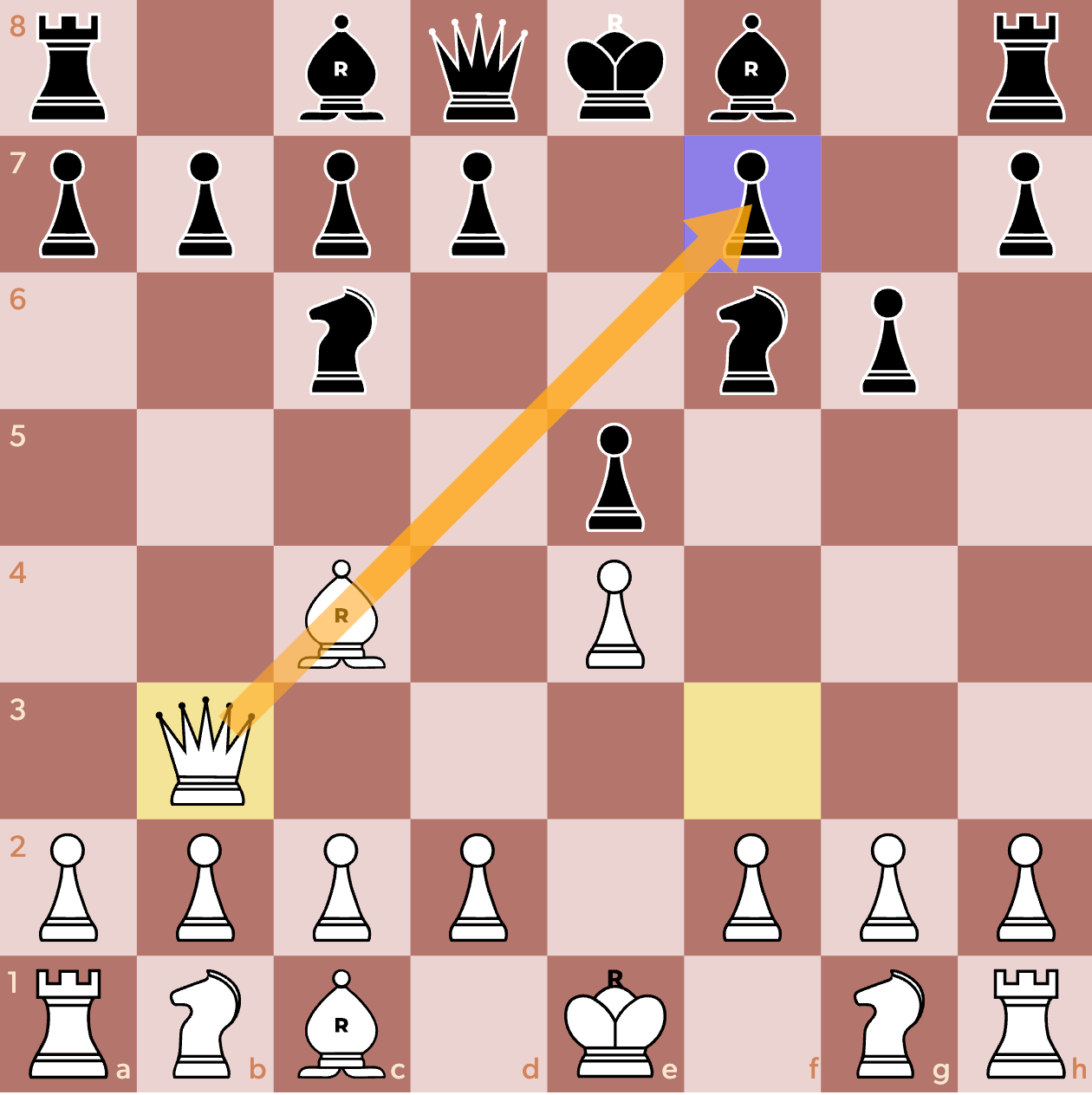
White uses the queen to support the bishop
Black can again play Nd4 here, attacking the queen.
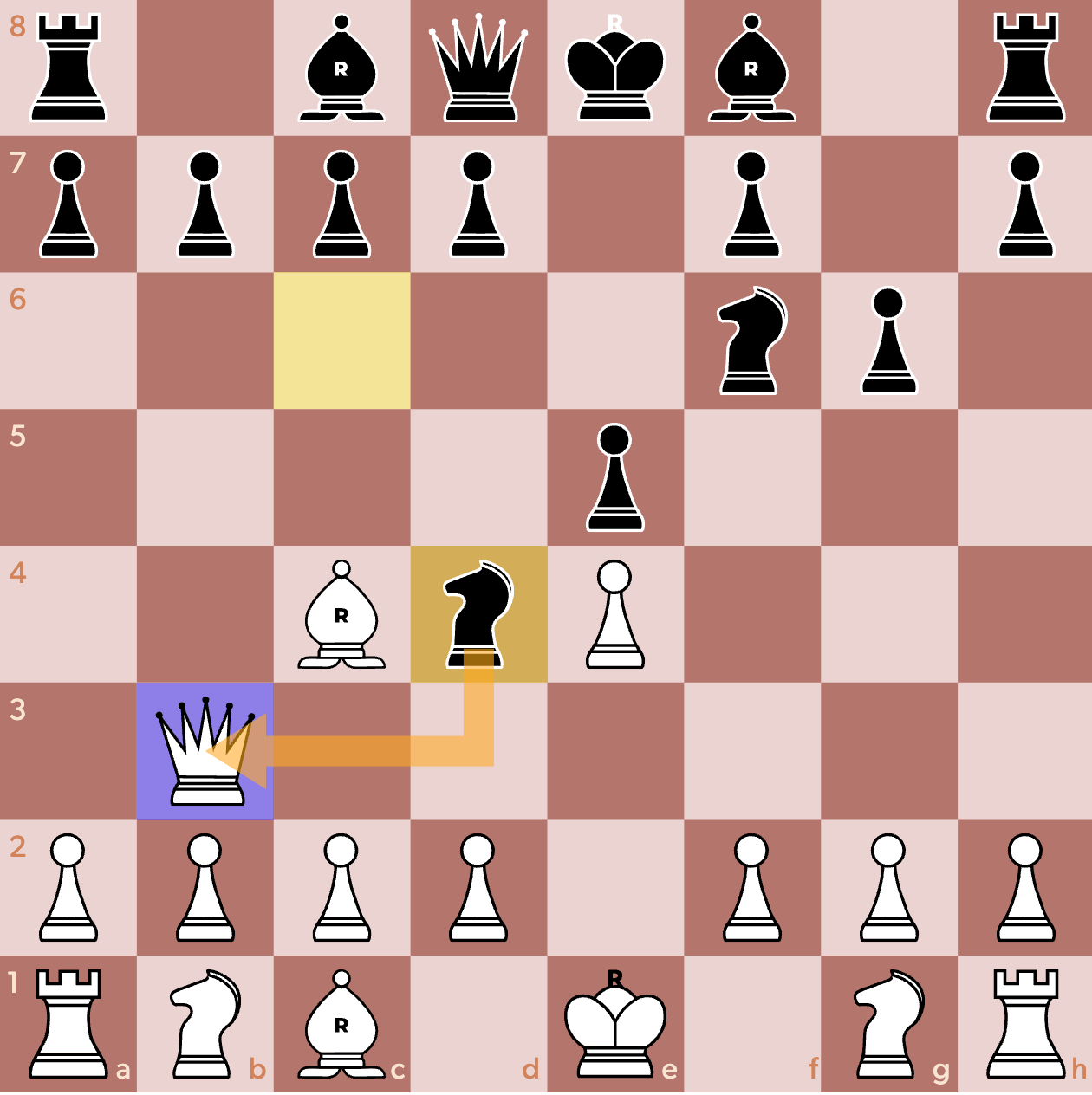
Black can counterattack again with Nd4
If white still decides to go through with the attack, that’s no problem.

White continues
After black plays Ke7 (the only move available), white’s bishop and queen are both under pressure.

Black calmly moves the king
The only square available for the white queen to safely defend the bishop from is c4.

The white queen has to move
And after black plays b5, the white queen is forced to leave the bishop’s diagonal, leaving it vulnerable.
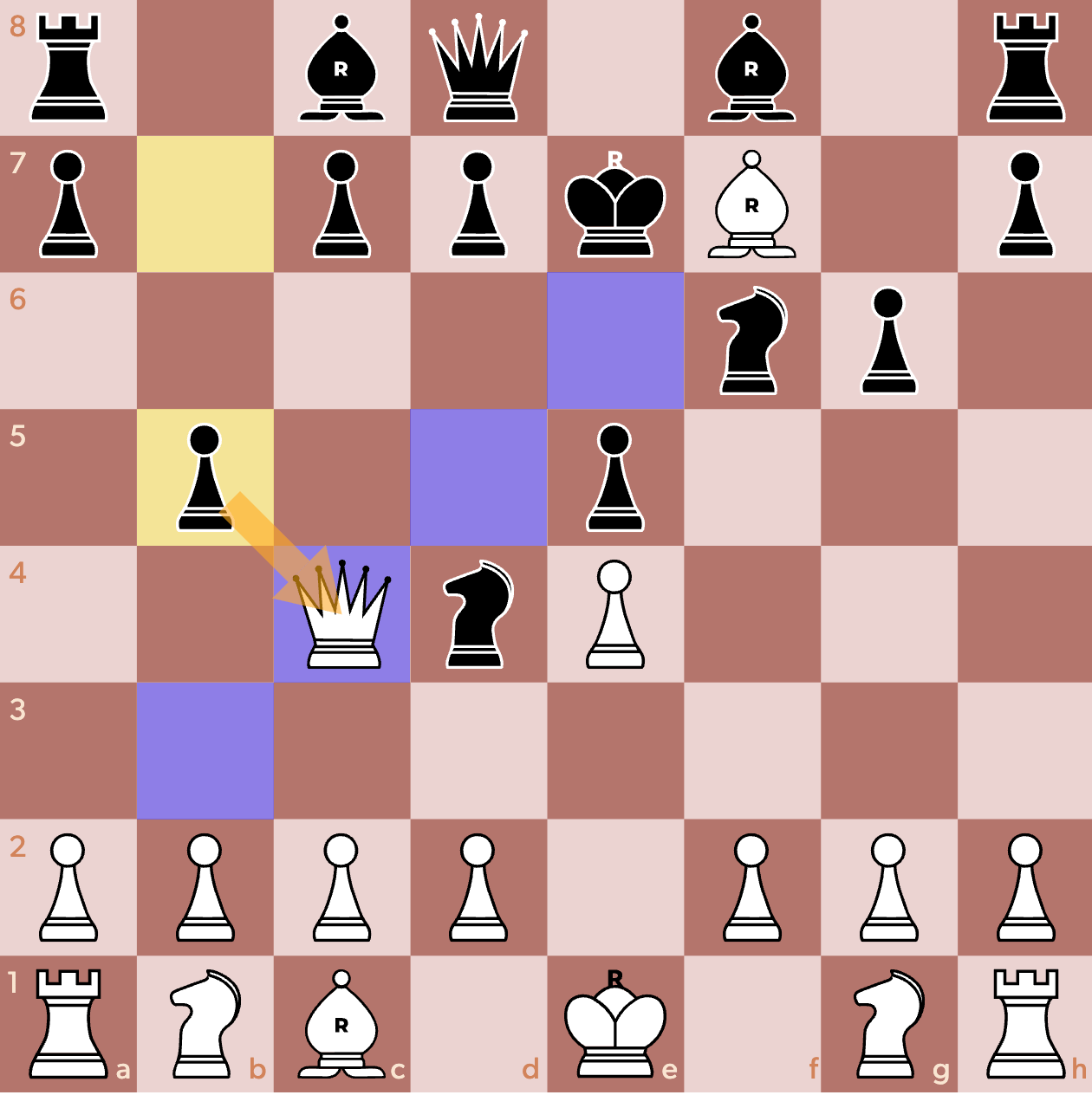
The white queen can no longer defend the bishop
Now the black king can scoop up white’s bishop, and black comes out ahead.
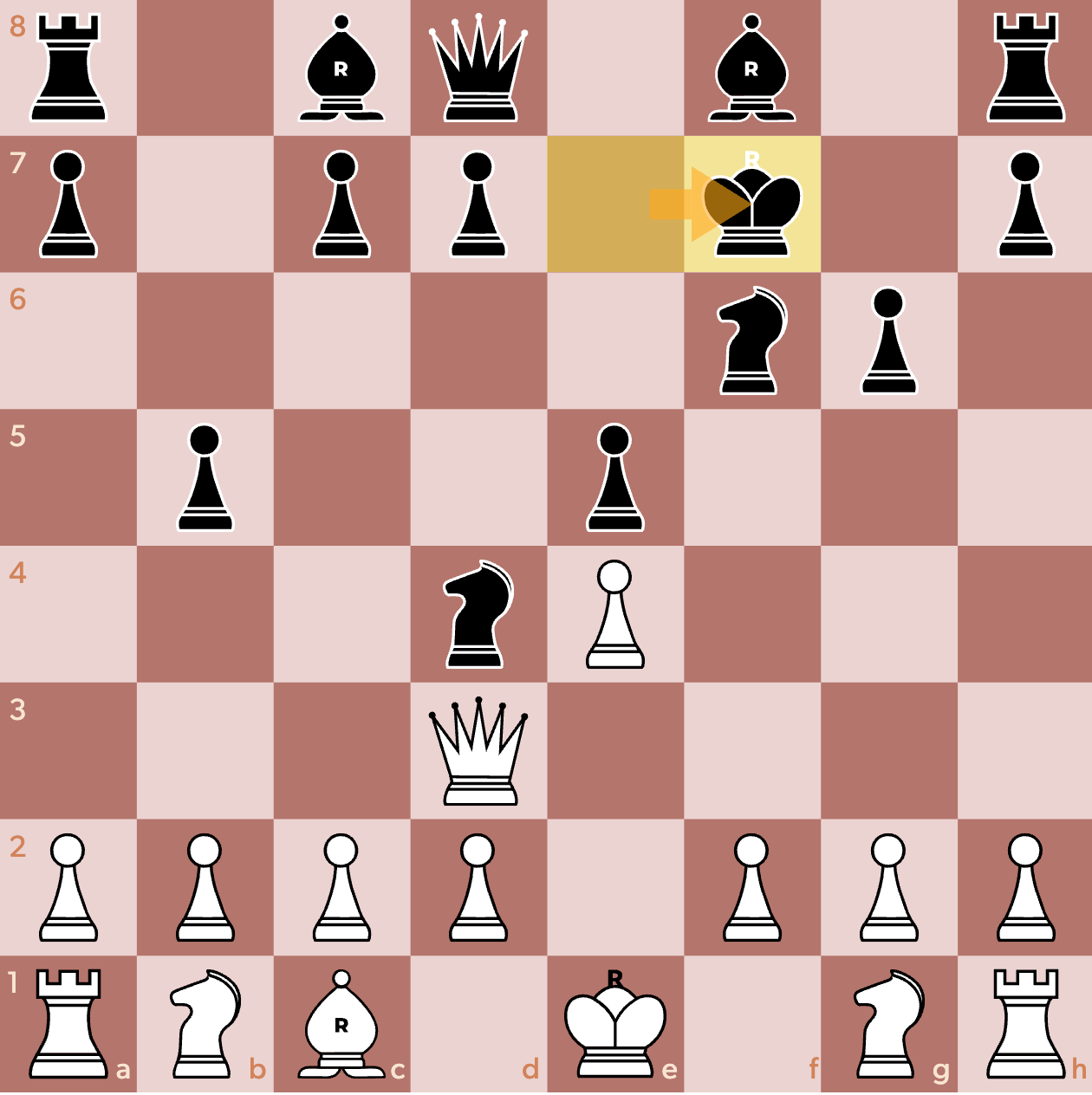
Black wins the exchange
Part 3: Avoiding the Threat Entirely
Black also has options that nullify this attack from white before it can begin. You can try the French Defence, which doubles up black’s pawns on the white bishop’s diagonal, blocking white’s light square bishop off.
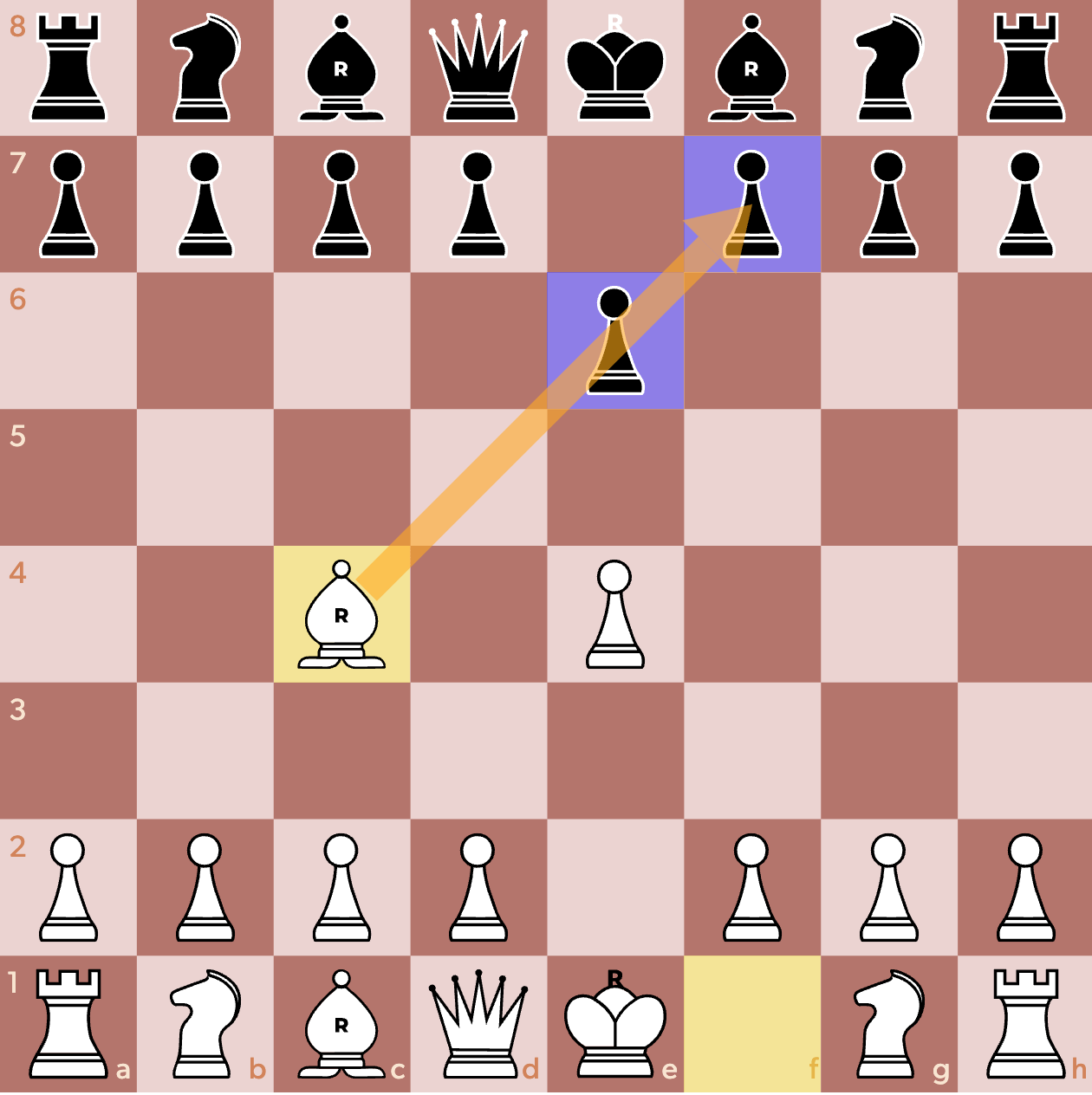
French
Or black can play the Caro-Kann, using c3 to support d4, and blocking white’s light square bishop off that way.
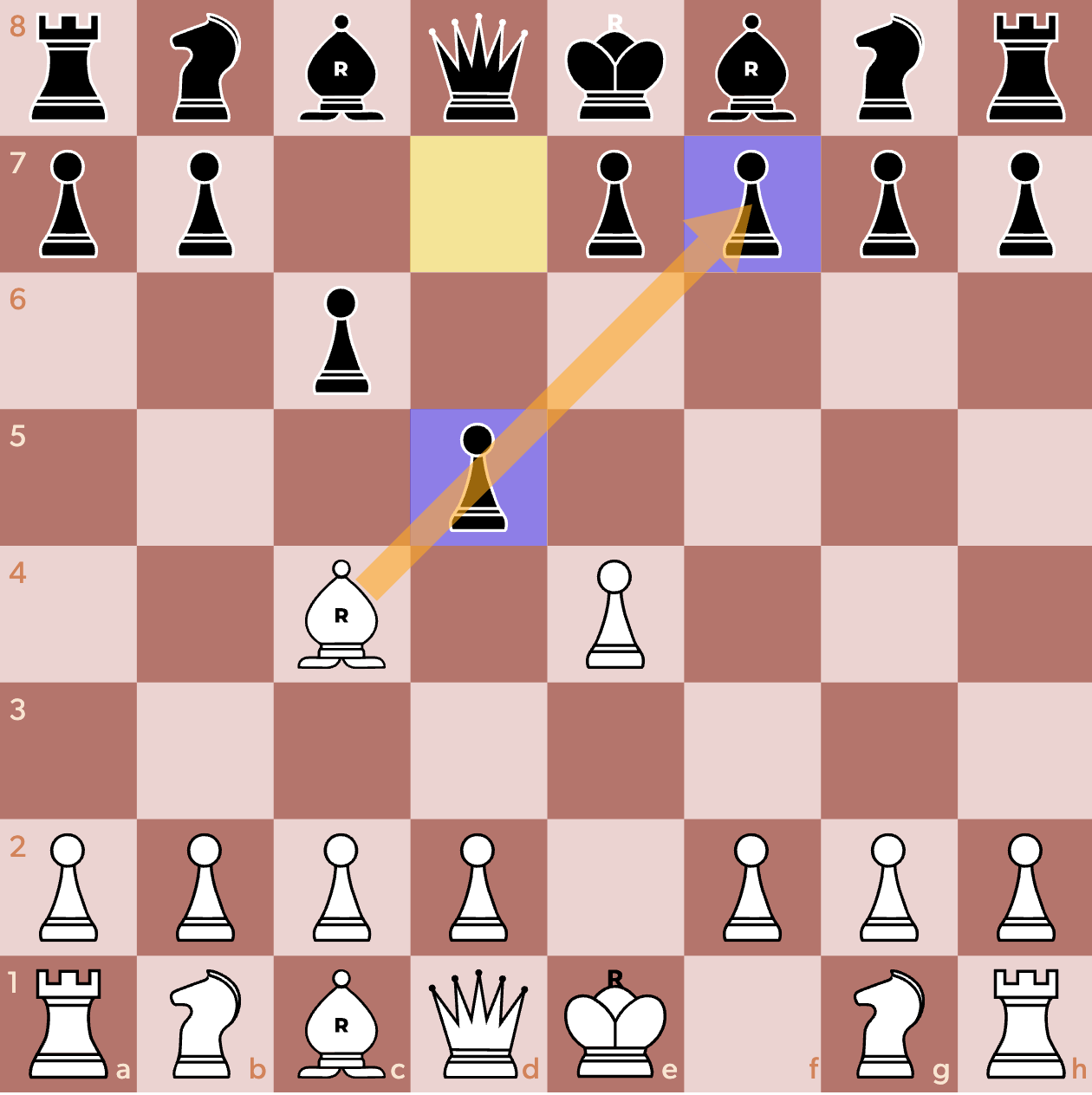
Caro-Kann
Even if white tries to use their own pawn to free up the bishop, the black queen still supports d4, and white’s bishop remains blocked off from eyeing f7.
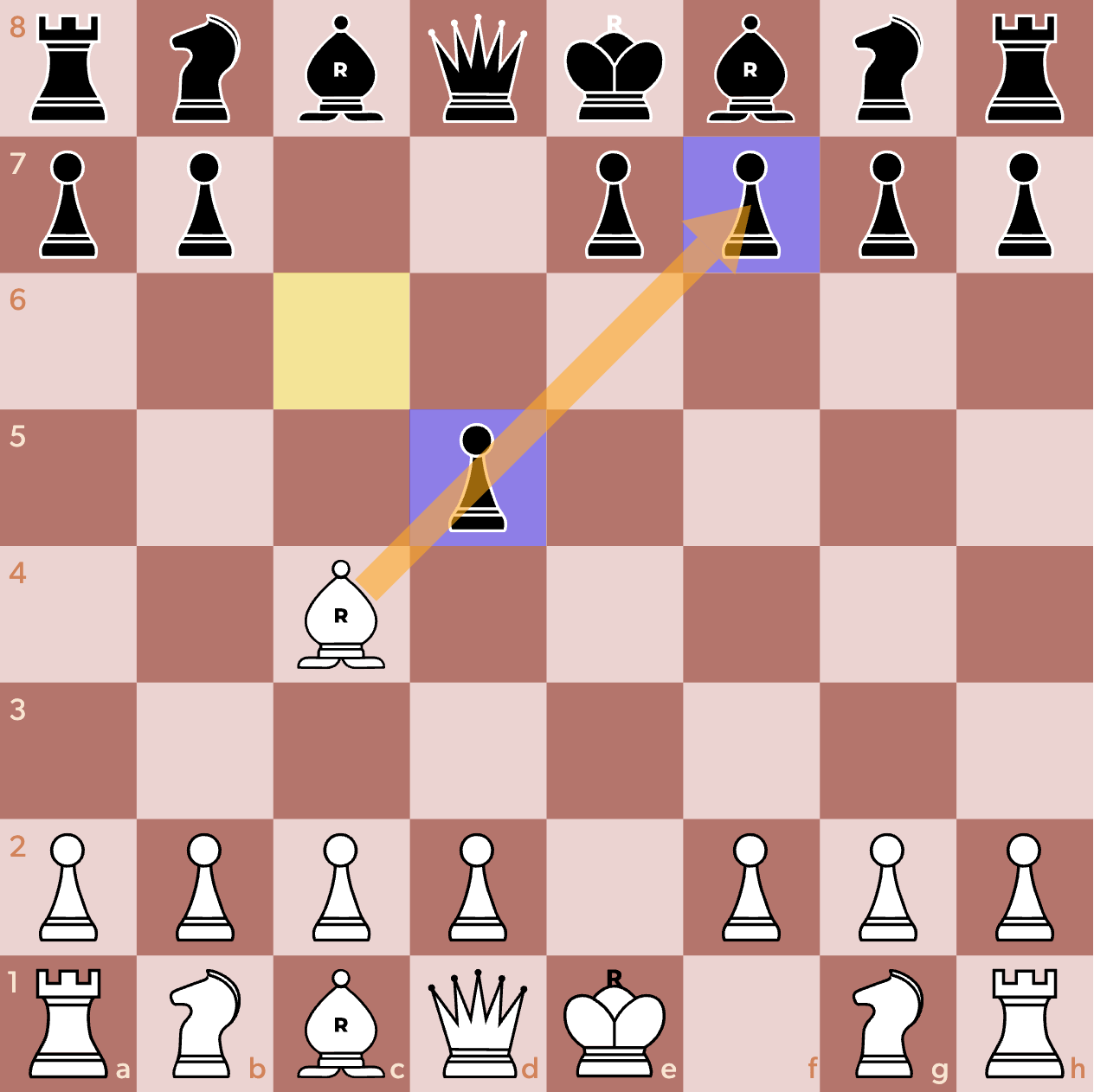
Caro-Kann still blocks the bishop
Part 4: Conclusion
Now that you know how to defend against it, you should be thrilled if your opponent tries the four-move checkmate against you! As long as black plays correctly, white will end up wasting a whole lot of time chasing a checkmate that doesn’t exist.
This also touches on another fundamental chess concept that you may have heard before: you almost always want to develop you minor pieces before your major pieces (especially your queen). We’ll go over this in the future!
Until then, enjoy this vintage Youtube clip, where a National Master loses to the four-move checkmate—it happens even to the best!
New at Rookly: Enhanced Spectator Mode
We have added audio for spectators!
We want to share the Rookly experience with as many faculty, parents, and students as possible. We are proud to announce some improvements to our spectator mode, which was created to let anyone watch live games and share the excitement of Rookly.
Students can hear proctor commentary while in the main lobby. Now, spectators can also opt-in to listening to our commentary as well so they can hear us just like the students do.
If you’re unsure of your school’s spectator link, or if there’s anything that you need help with this week please feel free to get in touch with Coach Lucas at lucas@rookly.com.
Looking forward to another great week of chess!