- This Week in Rookly
- Posts
- Rookly Fall 2025 Season - Week #3 Results
Rookly Fall 2025 Season - Week #3 Results
Your weekly recap of league standings, plus a look at the Game of the Week, and a visit to the Coaches' Corner.

Lucas Thompson
October 27, 2025

Welcome to the first Fall 2025 weekly newsletter! This is where we will share a weekly update on league standings, highlight some great moments from each week’s games, learn a thing or two from our coaches, and of course, share any news about Rookly.
First let’s look at last week’s scores. You can click on the title of a league to view the full standings for that league. The standings pages are public, so please feel free to share with parents, friends, or whoever you think might be interested!
And now, without further ado, here are the results of the third week of the Fall 2025 season:
Week #3 Standings
(4:00pm ET) | (3:30pm PT) |
|---|---|
Cardinal Kung - 46 | WIISER - 58 |
Newman - 45 | Lakeside - 45 |
Hannah Senesh - 29 | Temecula Prep - 43 |
Drew Charter - 28 | Alta Vista - 42 |
Pennfield - 26 | Oregon Episcopal - 36 |
(3:30pm ET) | (4:00pm PT) |
|---|---|
Ransom Everglades - 72 | Stanford Online - 64 |
The Journey School - 57 | Holy Ghost Prep - 50 |
Lake Center Christian - 54 | Temecula Prep - 47 |
Pace Academy - 50 | St. Joseph’s Notre Dame - 45 |
Downtown Middle - 44 | Bishop Mora - 42 |
(5:00pm ET) | (3:00pm ET) |
|---|---|
Montgomery Academy - 70 | Opportunities For Learning - 79 |
St. George’s - 60 | Hendersonville - 59 |
Manatee School of the Arts - 28 | St. John Paul II - 52 |
Lake Wales Charter - 28 | Nativity Prep - 49 |
Tulsa Honors - 27 | Marvin Academy - 28 |
(3:30pm ET) | (4:30pm ET) |
|---|---|
Calvary Day - 49 | Trinity Episcopal - 58 |
Camden Military Academy - 48 | Austin Jewish Academy - 56 |
Overhills - 43 | Leffell - 45 |
Discovery Academy - 38 | Veritas Christian - 39 |
Nativity New Bedford - 34 | Lakeside - 39 |
Game of the Week
Our game of the week this week goes to Aiden Z (Lakeside) v Odbayar Y (WIISER) from our Monday En Passant league. We saw excellent play by both players as the clocks dwindled down on bother players’ clocks during this 72 move game.
Neither player gave an inch in this game for the first 34 moves. The analysis has this one at -0.1 going into move 35. Black was able to seize on some small opportunities to build an insurmountable lead in the endgame. Beautiful play by both players, and an especially brilliant endgame by black!
I encourage you to check this one out here:

Coaches’ Corner
Coach Lucas’s tip of the week:
So far in our lessons we’ve looked at specific ways to checkmate (and avoid stalemating!) our opponent. This week, I’d like to look at the relative value of the pieces on the chess board—something we often call material.
The point system is a helpful way of assessing who has a stronger position in a game, and also in achieving a good outcome in something that happens a lot in chess—piece exchanges, or trades.
Let’s take a look at how many points each piece is worth:
Basic Point System
Pawn = 1 point
Knight = 3 points
Bishop = 3 points
Rook = 5 points
Queen = 9 points
King = priceless
Before we go any further, we need to be careful not to lose sight of the fact that the singular objective of chess is to checkmate the enemy king. It does not matter how many points you are up on your opponent if you don’t win the game. The point system is simply a helpful guide to us in reaching that objective.
Let’s take a look at why each of the pieces is worth what it is, starting with the most valuable piece, the queen.
The queen combines the movement capabilities of the rook and bishop into a single piece. Just look at how much of the board she can cover if she is in the center of the board:

The queen is covering 27 squares here!
Our king and queen also have to ability to checkmate the enemy king, as we went over in last week’s lesson:
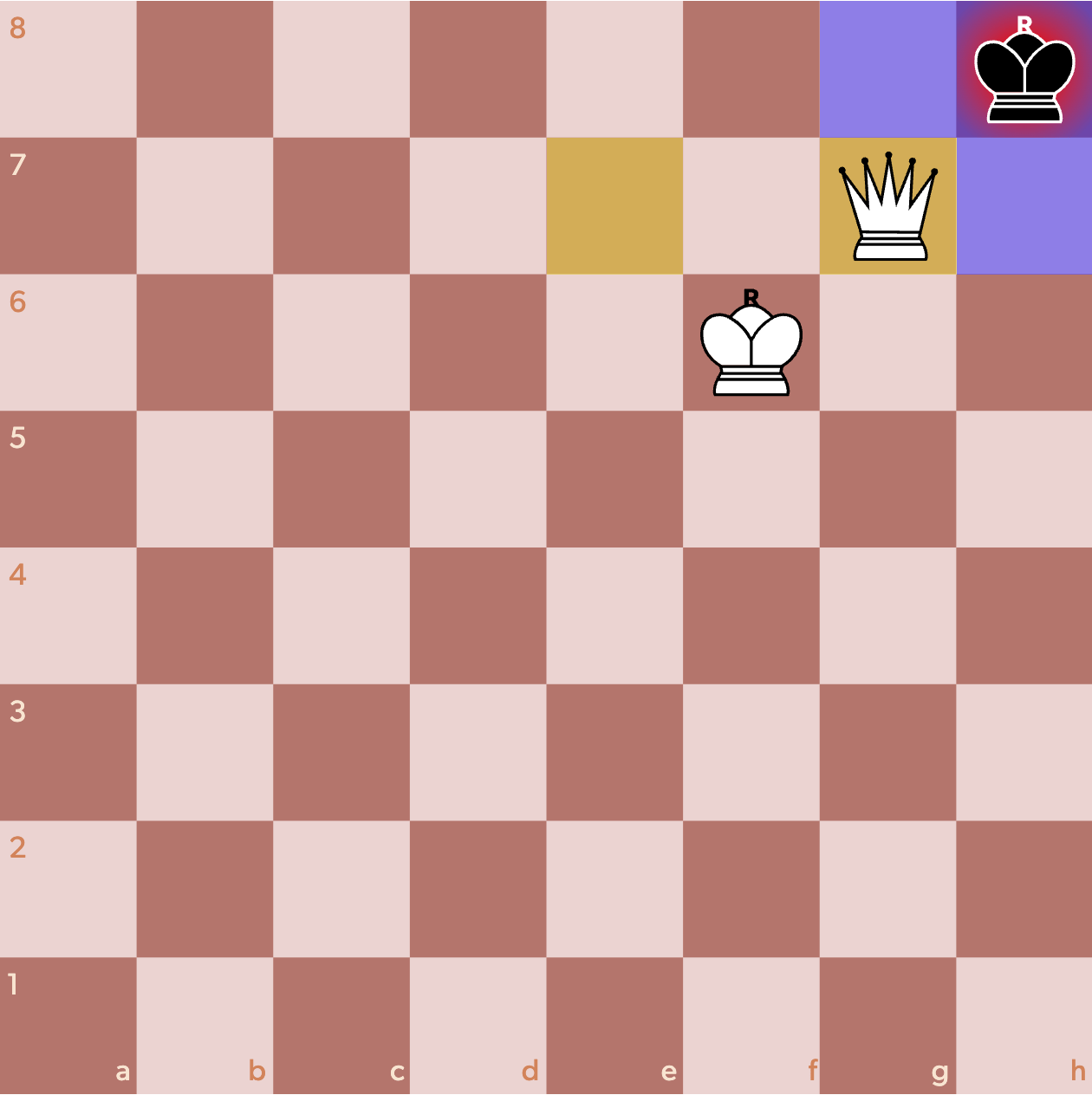
We discussed how to reach this checkmate position last week. Click this image to see last week’s lesson!
Let’s look at the next most powerful piece, the rook, and consider why the rook is more valuable than the bishop or knight. For one, the rook shares part of the queen’s great mobility:
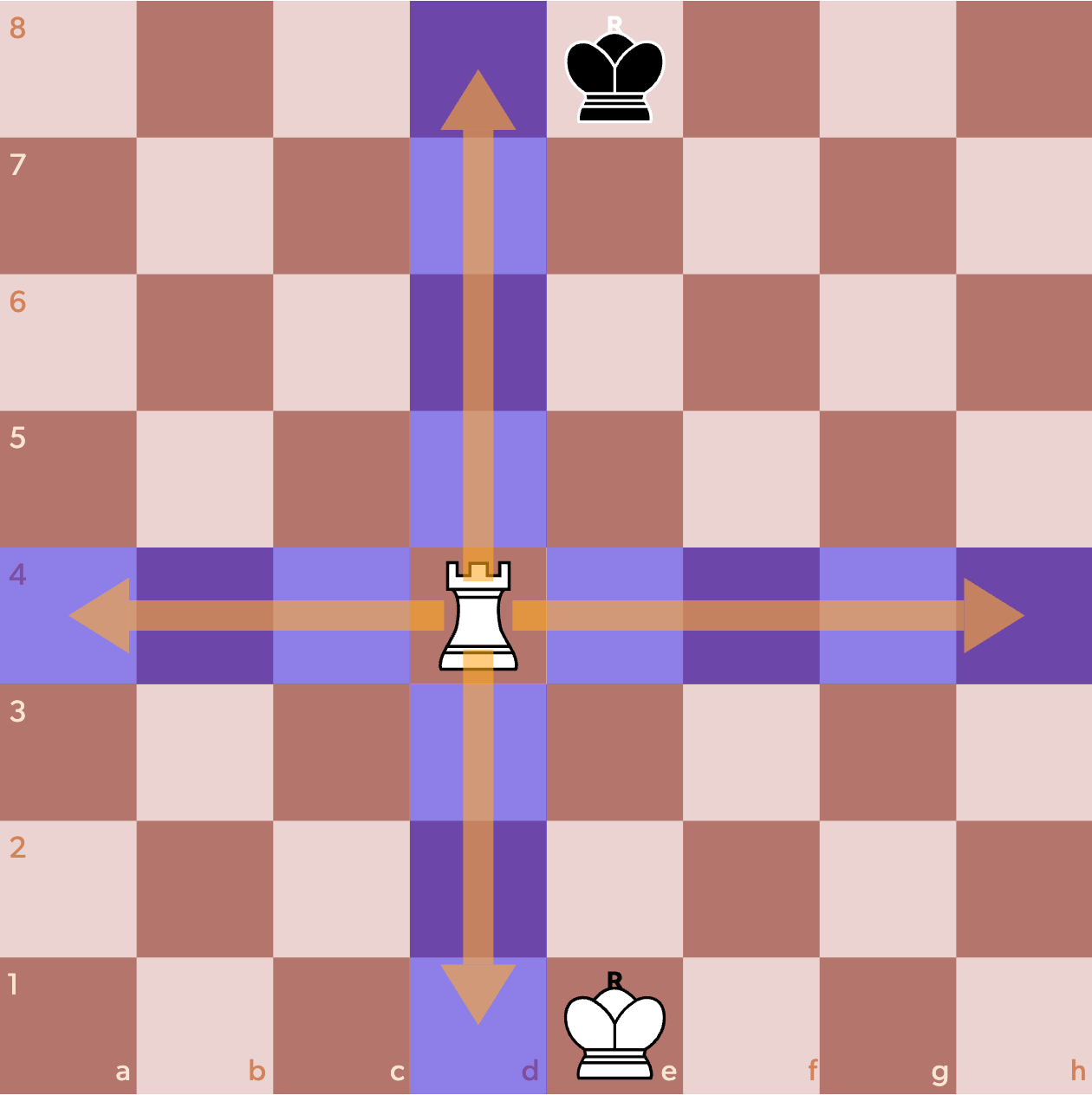
Only the rook and queen can single-handedly limit an enemy king’s movement like this.
Our king and rook are also capable of checkmating the enemy king, much like the queen is:
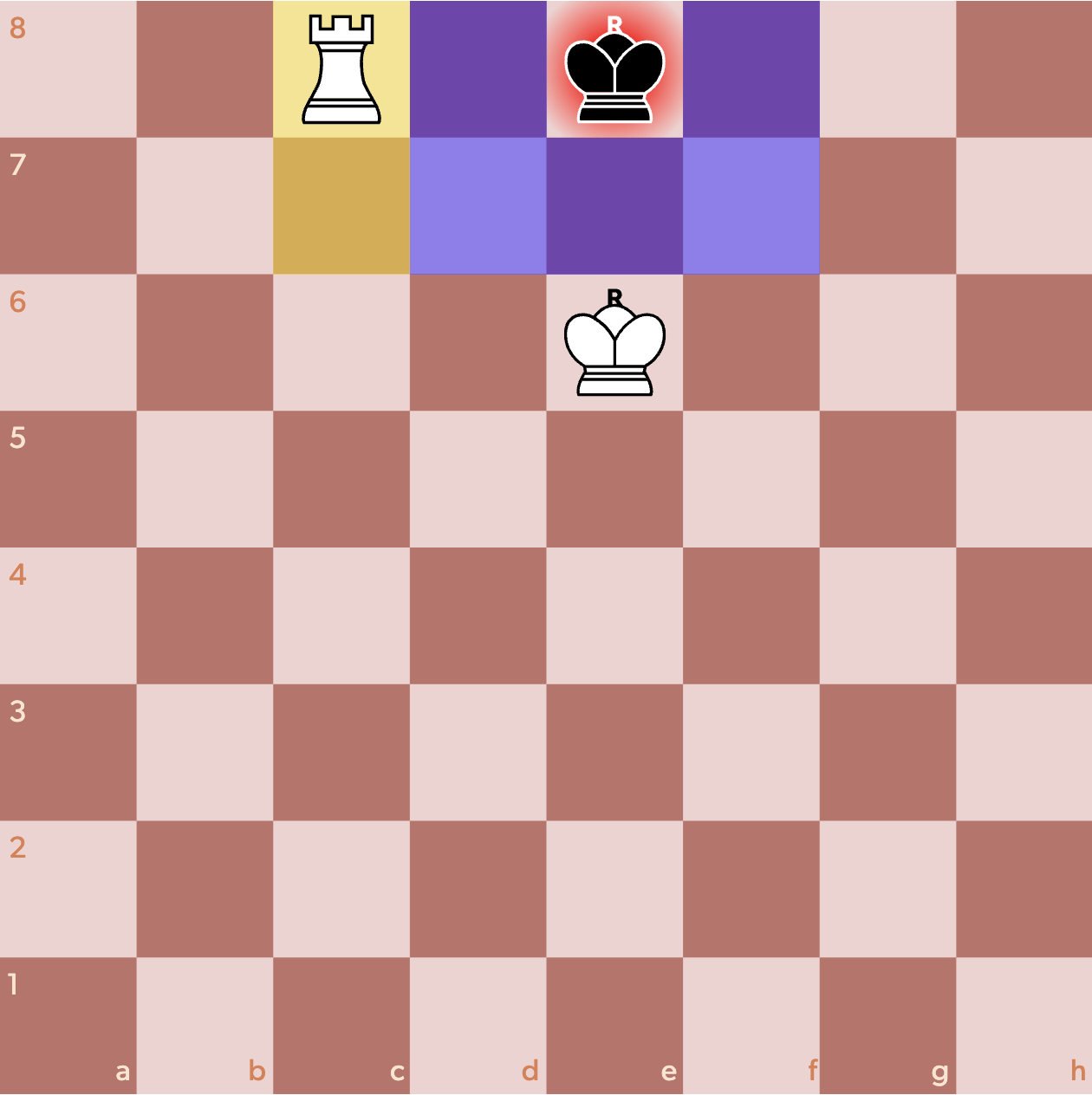
Rook and king checkmate.
The queen and rook and considered the major pieces. They have the ability (when working with our king) to checkmate the opponent.
Now let’s look at the knight and bishop. What limitations do they have that makes them worth fewer points?
The bishop, like the rook, has great mobility—

Rook and bishop mobility comparison.
—but is stuck to the same color squares for the whole game. It can only access half the board.

Bishop color limitation.
On the other hand, the knight is able to access any square on the board, but suffers from slower movement.
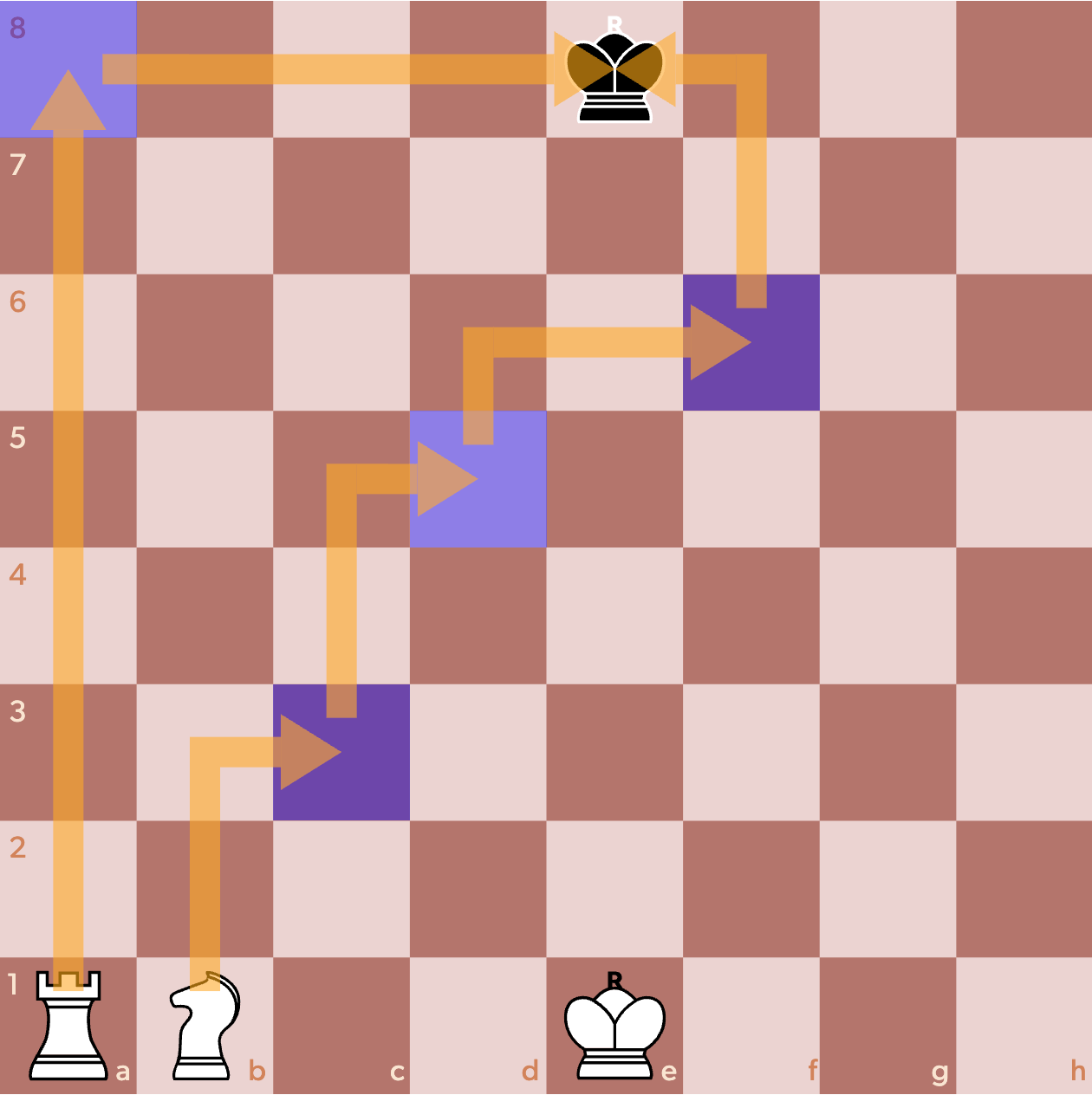
Rook and knight mobility comparison.
The knight and bishop are also not capable of checkmating the enemy king by themselves, whereas, as we saw earlier, the queen and rook are capable.
For these reasons, we call the bishop and knight the minor pieces.
And where does this leave the humble pawn? We will get into pawns more in the future, but in the meantime, consider this position:

Inevitable pawn promotion.
How many points would you say this pawn is worth? It’s about to promote to a queen, so you could effectively consider this pawn worth 9 points! Sometimes a one pawn difference can decide a chess game.
Good luck to all teams this week!
If there’s anything that you need help with please feel free to get in touch with Coach Lucas at lucas@rookly.com.
Looking forward to another great week of chess!